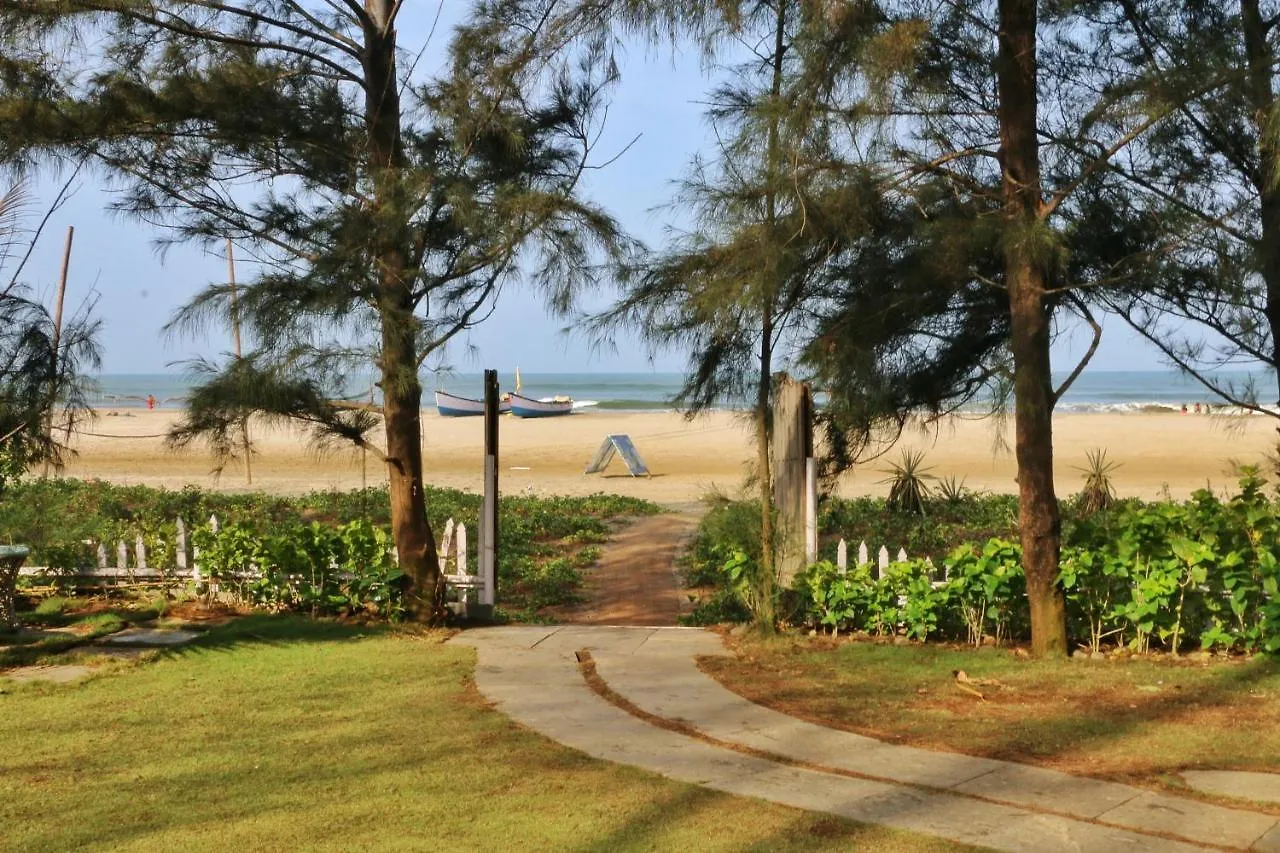
Morjim Beach sits at the northern tip of Goa's tourist belt, separated from the busier Calangute and Baga strips by the Chapora River crossing. This relative isolation defines the entire resort experience here - quieter sands, slower pace, and a traveler profile that skews toward those actively avoiding the noise of South Calangute. The four resorts covered in this guide all sit on or within walking distance of the beachfront, offering direct access to one of Goa's least-crowded northern shores.
What It's Like Staying in Morjim Beach
Morjim is not a self-contained resort hub - it's a low-density coastal strip where beach shacks, yoga studios, and small resorts coexist with fishing villages and nesting olive ridley turtle zones. Getting anywhere beyond the beach requires transport, as Morjim has no walkable town center, no pharmacy cluster, and limited street food options compared to Anjuna or Calangute. The nearest significant market town, Mapusa, is around 20 km away, and most guests rely on scooter hire, tuk-tuks, or resort-arranged transfers for any non-beach activity.
Staying here makes strong practical sense if your priority is beachfront access with minimal surrounding noise - the sand stays noticeably less crowded than beaches south of the Chapora River, and the resort-to-beach ratio keeps the shoreline from feeling commercial. Travelers expecting a walkable nightlife scene or dense dining strip will find Morjim underwhelming on those counts.
Pros:
- Uncrowded beach with turtle nesting zones and dolphin-sighting opportunities directly offshore
- Resorts here sit genuinely on the beachfront - not a 10-minute walk away
- Quieter road access compared to Calangute and Candolim reduces ambient noise at night
Cons:
- No walkable commercial zone - transport needed for restaurants, shops, or nightlife
- Calangute and its flea markets are around 10 km south, requiring a planned trip
- Limited taxi availability at off-peak hours; advance booking recommended for airport transfers
Why Choose a Resort Stay in Morjim Beach
Resorts in Morjim operate differently from those in Goa's busier coastal corridors. Because the area attracts a lower-volume, longer-stay crowd - including Russian and European travelers who return seasonally - properties here tend to invest in on-site facilities rather than relying on a surrounding entertainment district. Most resorts include pools, in-house restaurants, and spa access, because guests aren't stepping out to a nearby strip for dinner. Room sizes are generally more generous than Goa's urban guesthouses, and balconies or garden-facing terraces are standard across the category.
The trade-off is that you're committing to a self-contained stay. If a meal at the resort's restaurant disappoints, the nearest alternative might be a beach shack a 10-minute walk away. Rates at Morjim resorts during peak season (November through February) can reach around ₹8,000-₹12,000 per night for a sea-facing room, which is comparable to mid-range options in Candolim but with a significantly quieter environment as compensation.
Pros:
- On-site pools, restaurants, and spa facilities reduce dependency on external services
- Beachfront access is direct and uncrowded, not mediated by a busy road
- Room quality and space standards are higher than equivalent-priced guesthouses in busier Goa zones
Cons:
- Limited dining variety outside resort premises - you're largely committed to in-house options
- Peak season rates are not significantly lower than comparable Goa resort zones despite the remoteness
- Some resorts have limited walkable surroundings, making evening strolls less varied
Practical Booking & Area Strategy for Morjim Beach
The most strategically positioned resorts in Morjim sit directly on the northern stretch of the beach near the Tereka River mouth, which offers the cleanest swimming conditions and the best chance of early morning dolphin sightings from shore. The southern end of Morjim Beach, closer to the Chapora River ferry crossing on the Siolim Bridge road, sees more local foot traffic and occasional fishing boat activity. Booking a beachfront room on the north-facing side of a resort provides meaningfully better sunrise views and more direct turtle zone proximity between October and February.
Transport logistics matter here: the Siolim Bridge connects Morjim to Chapora and Vagator, making those villages accessible in around 15 minutes by scooter. Panaji, Goa's capital, is approximately 17 km away via the NH66. For airport arrivals from Dabolim (now Goa International), the drive is around 55 km - budget at least 90 minutes during peak afternoon traffic. Book early for the November-February window, as beachfront rooms sell out weeks in advance and last-minute availability at this tier is rare. The off-season (May through September) brings monsoon conditions that close most beach activity, but rates drop significantly and the landscape turns dramatically green.
Things to do in Morjim extend beyond beach time: dolphin-spotting boat trips depart from the northern beach each morning, Chapora Fort is a 20-minute drive, Ashwem Beach continues north as a less-visited alternative, and the Tiracol Fort makes a half-day excursion around 21 km north. The weekly Anjuna Flea Market and the Arpora Saturday Night Market are both reachable within 20 minutes.
Best Value Resorts in Morjim Beach
These two resorts offer strong beachfront positioning with comprehensive on-site facilities, making them well-suited for stays where convenience and coastal access take priority over premium room finishes.
-
1. Montego Bay Beach Village - Morjim
Show on map


 Check-infrom 13:30 until 23:59Check-outuntil 11:00
Just a few rooms left at the best rate!
fromINR 6477
-
2. Larisa Resort, Morjim
Show on map


 Check-infrom 14:00 until 22:00Check-outfrom 06:00 until 12:00
Just a few rooms left at the best rate!
fromINR 10001
Best Premium Resorts in Morjim Beach
These two resorts bring a higher facility density and more structured guest experience, with multi-restaurant setups, spa access, and room configurations suited to longer or more comfort-oriented stays.
-
3. La Vaiencia Beach Resort, Morjim
Show on map


 Check-infrom 13:30 until 23:30Check-outuntil 11:00
Hurry – almost gone at this price!
fromINR 3524
-
4. Sibaya Beach Resort, Morjim
Show on map


 Check-infrom 14:00 until 23:59Check-outfrom 06:00 until 11:00
Rooms filling fast – secure the best rate!
fromINR 6667
Smart Travel & Timing Advice for Morjim Beach
The peak window runs from mid-November through late February, when Morjim benefits from dry weather, calm seas, and the presence of olive ridley turtle nesting activity on the northern beach. This is also when beachfront resort rates hit their seasonal ceiling, and availability at the four properties listed here tightens significantly - booking 6 weeks in advance is a realistic minimum for the best room categories during this period. The Christmas and New Year fortnight sees the highest concentration of domestic and international arrivals, with some resorts applying minimum-stay requirements of 3 nights.
March through April offers a transitional window: weather remains dry, crowds thin noticeably after the February peak, and rates begin to ease without the monsoon risk. This is arguably the most cost-efficient time to experience Morjim's beachfront resorts at close to full capacity operation. May through September brings the Southwest Monsoon, which closes beach shacks, disrupts sea activity, and renders outdoor pools less appealing - most resorts remain open but operate at reduced service levels.
A stay of 3 nights is the practical minimum to justify the transport distance from Goa's airport and make meaningful use of Morjim's slower rhythm. Five nights or more gives time to day-trip to Chapora Fort, Tiracol, and Anjuna without feeling rushed. Last-minute bookings in peak season are high-risk at the beachfront tier; last-minute deals are more realistic in March or October when occupancy is lower.